Nathan Oliver’s declining literary powers and eyesight
The LighthouseNathan Oliver’s declining literary powers and eyesight are bound together in his fear that the capacities on which his life as a writer depends are disappearing. The deterioration is not merely a professional concern: it unsettles his sense of self, sharpens his attachment to Combe Island, and makes the loss of the people who care for him feel inseparable from the loss of his words.
The Island and the Fading Work
Nathan’s wish to occupy Atlantic Cottage has a practical explanation: he visits Combe Island with Miranda Oliver and Dennis Tremlett and wants cottages close together. But Emily Holcombe senses that his desire reaches beyond convenience. Atlantic Cottage is where he was born and lived until he left the island at sixteen, without explanation, to pursue a solitary life as a writer. She wonders whether he has come to believe that his talent cannot survive without the place, or whether, as his work and life approach their end, only his birthplace can give his spirit rest.
His recurring visits make that attachment a continuing presence in Emily’s life. For seven years he has come every three months and stayed for precisely two weeks. Even if he cannot dislodge her from the cottage, his repeated pursuit of it disturbs her peace. The island thus stands both for his origin and for a hoped-for answer to decline; Emily, however, cannot tell whether the intensity of his desire is a rational need or an alarming sign of a mind under strain.
Words, Vision, and Isolation
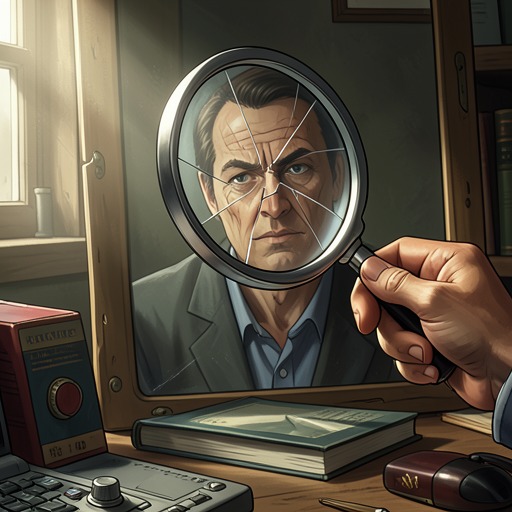
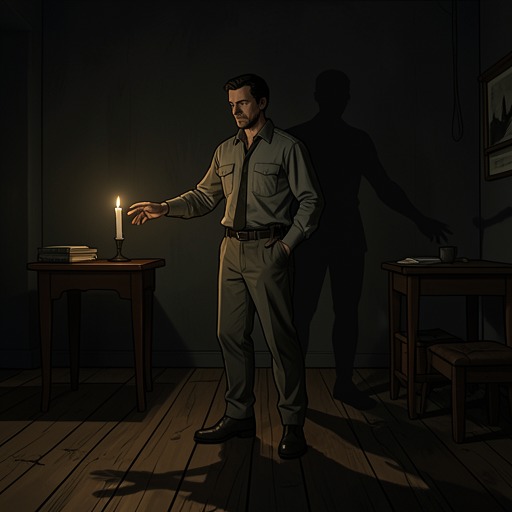
At sixty-eight, Nathan experiences his decline as a gradual diminishment of both sight and creative power. One night, after waking from a bad dream, he opens his bedroom window onto the stars and the sea. The stars seem brilliant, but he recognizes that their brilliance belongs to his failing mind, while his eyes can no longer see clearly. The scene turns an impairment of vision into an immediate experience of isolation: he feels small beneath the immensity of the night and believes there is no help anywhere on earth.
His unspoken cry, “Don’t take away my words! Give me back my words!”, makes the feared loss concrete. Words are not presented as a detachable skill that he can calmly replace; their disappearance threatens the means through which he has lived and understood himself. The contrast between the stars’ apparent radiance and his inability to see them clearly gives the moment its force: what remains vivid inwardly cannot restore what is failing in perception or creation.
Emotional Decline and Dependence
After an encounter with Miranda, Nathan walks alone for an hour along the cliff, trying to master a confusion of fury and self-pity. His anger feels exhilarating and self-justifying, but he knows it may give way to hopelessness and depression. He treats his dispute with Mark Yelland as mere semantics beside what he sees as the treachery of Miranda and Tremlett. The episode connects his emotional volatility to his dependence on the people closest to him, rather than establishing the argument with Yelland as the central source of his distress.
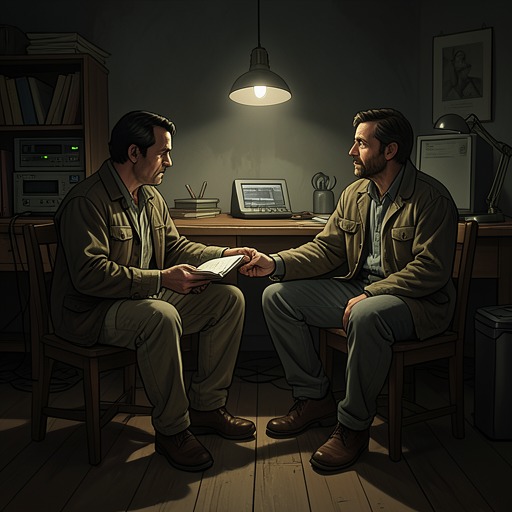
Returning to Peregrine Cottage, Nathan imagines that Miranda will resume her familiar care and that Tremlett will be made to leave. He reasons that Miranda would not surrender their security, comfort, overseas visits, and the prospect of her inheritance for life with Tremlett. His certainty that she will stay sits uneasily beside his fear that she has chosen another future. The prospect of losing her attention matters all the more because, on other nights, she has answered his cries after nightmares, reassured him, and offered to make tea. On this night he believes no one will come.
How Others Interpret the Decline
Emily Holcombe reads Nathan’s declining talent and old age as possible reasons he might have chosen suicide. She also considers whether Miranda and Tremlett’s proposed departure could have acted as a catalyst, given what she sees as his near-total dependence on them. This is Emily’s speculation, not a confirmed explanation of his death: she characterizes the dinner scene as abnormal even by Nathan’s standards and leaves the police to investigate the possibility.
The novel therefore gives the decline both an inward and an outward account. Nathan experiences the loss of words and clear sight as intimate, nearly cosmic abandonment; Emily interprets fading talent, age, and threatened dependence as circumstances that might explain suicidal despair. These perspectives make his deterioration a source of vulnerability and suspicion, while preserving the distinction between what he fears, what others infer, and what the investigation must establish.